Professional Service Dog Training South Florida



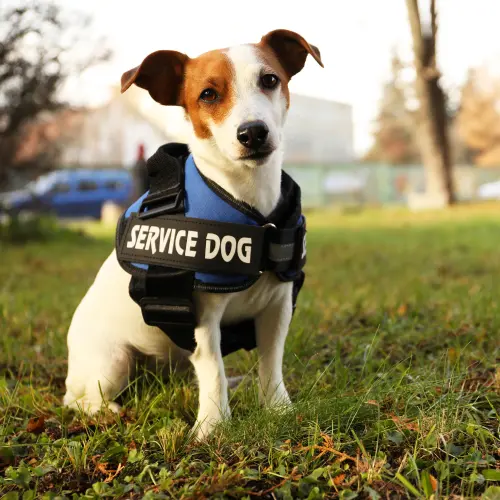
At K9 Advisors, we provide specialized training for Service Dogs, focusing on task-based skills that help individuals manage physical, psychiatric, and neurological disabilities. This page explains the differences between Service Dogs, Emotional Support Animals, and Therapy Dogs, so you can clearly understand which category fits your needs and what type of training is required.
What Is a Service Dog?
A Service Dog is defined under the Americans with Disabilities Act (ADA) as a dog that is trained to perform specific tasks for a person with a disability.
Service Dogs are trained to assist their owner/handler with specific tasks that help them mitigate physical and/or psychiatric conditions.
Examples of tasks include:
- Alerting medical conditions
- Interrupting panic attacks or PTSD episodes
- Providing balance or mobility assistance
- Retrieving dropped items
- Guiding individuals with visual impairments
Key Points:
- The tasks must directly relate to the person’s disability.
- Service Dogs have full public access rights under the ADA.
- Only dogs trained to perform disability-mitigating tasks qualify as Service Dogs.
What we do:
K9 Advisors creates customized Service Dog training programs based on your diagnosis, needs, and daily living challenges. We train dogs for reliability, public access behavior, and specific tasks that support your disability.
Why Choose K9 Advisors for Service Dog Training?
- Over 30 years of professional experience
- Customized task-training for your specific disability
- Public access training in real-world environments
- Obedience, stability, and behavior reliability
- Handler education and long-term support
We are committed to helping you build a strong, dependable partnership with your Service Dog, one that improves your safety, independence, and quality of life.
Certification & Documentation
At the end of your Service Dog’s training program, you will receive a Certificate of Completion and a Letter of Completion, both signed by your trainer. These documents confirm the skills your dog has learned, outline the tasks they are trained to perform, and provide helpful documentation for housing, travel, or general verification purposes.
Next Steps
- Schedule a FREE consultationto discuss your needs and eligibility.
- We evaluate your dog (or help you choose one).
- We create a training plan based on the tasks you require.
- Training includes public access, distraction control, and task performance.
- We support you throughout the entire process, including refresher training as needed.
Comparison Chart
Service Dogs vs. ESA vs. Therapy Dogs
|
Category |
Service Dog |
Emotional Support Animal (ESA) |
Therapy Dog |
|
Purpose |
Performs specific tasks to assist a person with a disability |
Provides comfort and emotional support by presence alone |
Provides comfort and affection to other people |
|
Training Required |
Yes — extensive, task-based training |
No training required |
Yes — obedience, calm temperament, socialization |
|
Who They Help |
One individual with a disability |
One individual needing emotional support |
Groups of people (patients, students, seniors, etc.) |
|
ADA Public Access Rights |
Yes — allowed in public places (stores, restaurants, hotels, etc.) |
No ADA public access rights |
No ADA public access rights |
|
Housing Rights (Fair Housing Act) |
Allowed |
Allowed with proper documentation |
Not covered |
|
Air Travel Rights |
Vary by airline |
Vary by airline; not guaranteed |
No special air travel rights |
|
Allowed Species |
Dogs only |
Any species (dogs, cats, birds, reptiles, etc.) |
Typically dogs |
|
Documentation Needed |
None legally required (businesses may only ask 2 ADA questions) |
Letter from licensed mental health professional |
Certification may be required by facility or therapy organization |
|
Handler Role |
Depends on the dog daily for disability-related tasks |
Receives emotional comfort from the animal |
Visits facilities to provide comfort to others |
|
Public Behavior Standard |
Must be calm, trained, well-behaved in all environments |
Must behave appropriately but no training requirements |
Must be friendly, calm, gentle, and predictable |
K9 ADVISORS SOUTH FLORIDA DOG TRAINING
Miami - Broward - Palm Beach
Contact Us for a FREE Phone Consultation 954-923-3440
© K9advisors.com - All Rights Reserved |
Dog Aggression Problems
 954-923-3440